
Republican leaders powerless to stop January health care vote after easing glitch on ACA subsidies | Luck
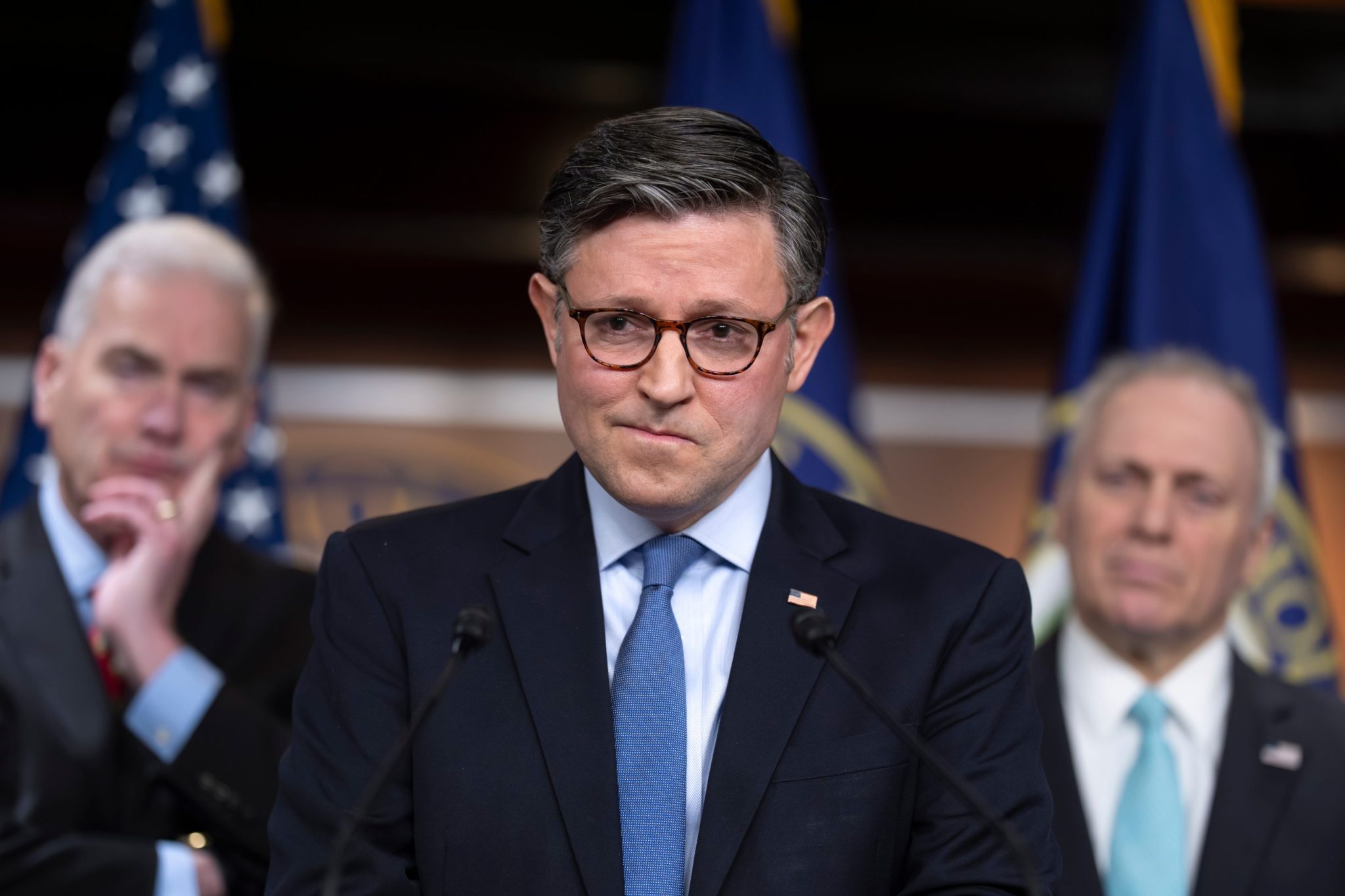
Speaker Mike Johnson had a ready refrain when asked why Republicans weren’t pushing to expand federal health care subsidies: their party wanted to help 100% of Americans with their costs, not just the 7% of Americans enrolled in Affordable Care Act plans.
But not 100% of his conference agreed.
A rare rebellion from the moderate wing of the party thwarted Johnson’s plans. Four Republicans signed a Democratic discharge petition this week that guarantees the House will vote to extend ACA subsidies sometime in January, with Republican leaders now powerless to stop it.
For Democrats, it was a vindication of a months-long strategy, beginning with the government shutdown in the fall, that pushed the expiration of support for the ACA to the forefront of politics. Republicans from competitive districts most at risk of losing seats in next year’s midterms felt the political pressure when they heard from voters about their soaring premiums.
“Nothing has changed with the House Republican leadership, but something has changed within their own ranks,” said Rep. Pete Aguilar, chairman of the House Democratic Caucus.
Flanked by his rally on the Capitol steps Thursday, House Democratic Speaker Hakeem Jeffries demanded that Johnson allow a vote on the three-year ACA subsidy extension before lawmakers go on recess: “Not tomorrow. Not next week. Not next year. Today.”
Johnson declined, saying “he’ll be on the floor the first week of January when we come back.”
Lawmakers prepare to leave in limbo
The impasse hit lawmakers as they headed home for the holiday break. Republican leaders are now facing mounting pressure to appease centrist members who are threatening to side with Democrats to approve a three-year extension of the Affordable Care Act subsidies.
Senate Majority Leader John Thune must also address the issue. Any ACA bill that would clear the House would simply shift the fight to the Senate, which has already rejected a three-year extension.
A bipartisan group of senators is meeting to discuss possible compromise bills that would extend the subsidies but put new limits on them. But they wouldn’t think about anything until January.
Thune told reporters Thursday that a three-year extension of “a failed program that is riddled with fraud, waste and abuse is not happening.”
Still, Republican leaders in both chambers have not offered a plan that fully addresses members’ concerns about the spike in insurance costs that many Americans will face in 2026 and potentially beyond.
The White House has engaged in discussions on the health care proposals, but has largely allowed House Republicans to mend their internal divisions and coalesce around a plan on their own, according to a senior administration official involved in the talks, who spoke on condition of anonymity to discuss the private discussions.
House Republicans on Wednesday approved a more than 100-page health care package focused on long-term GOP priorities, including expanding coverage options for small businesses and the self-employed. The bill also would rein in pharmacy benefit managers — the middlemen who manage drug costs and process insurance claims.
Johnson promoted the measure as “a bigger, better, more important thing for 100% of Americans, not just 7% of Americans.” But some Republicans, facing tough re-election bids, remain fixated on the looming increase in ACA costs.
The holidays give Johnson a brief window to try to convince moderates to abandon the effort. The discharge petition was frozen once it reached the 218-signature threshold, meaning that while only four Republicans have publicly signed on, others may be willing to support the Democratic bill.
Rep. Ryan Mackenzie, one of four Republicans who signed the Democratic petition, said it “sparked more conversations” and that “hopefully in the next three weeks we’ll actually see some changes in some bipartisan efforts that can actually create a meaningful vote that gets 218 in the House and 60 in the Senate.”
“I think enabling voting is critically important,” Mackenzie said. “I think everyone should be able to cast their votes on the board and should be able to let everyone in the American public see how they voted on these individual issues.”
Leader Jeffries’ waiting game is paying off
For months, Jeffries has refused to support a one-year extension of ACA subsidies sought by a bipartisan group of lawmakers, dismissing it as a “non-starter” and a “ridiculous proposal.”
Instead, he held fast to a three-year extension with no revenue restrictions or cost offsets. This strategy paid off as GOP moderates were forced to go his way when Johnson refused to allow any vote on the ACA extension.
Jeffries has faced criticism this year from progressive members of his caucus and grassroots groups, who have urged him to push harder against Trump and Republicans. But on Thursday, much of the party rallied behind him on the steps of the Capitol, with several lawmakers praising his approach.
“As Leader Jeffries has said all along, this is the only real plan on the table,” Aguilar said.
Although Democrats secured the vote, insurance costs will rise by millions next year, and passage of a three-year extension of ACA subsidies remains a long way off even if it passes the House. Senate Republicans have already rejected a three-year extension, but some GOP senators open to a subsidy deal said a House vote could provide momentum.
“We could have a vehicle — if we could get Republicans and Democrats behind it — then we could send it back,” GOP Sen. Thom Tillis said, adding that “that means there’s still a chance.”
The fight has also allowed Democrats to rally around a message they believe could prove effective on the campaign trail.
“The Republican health care crisis is unacceptable, unconscionable and un-American,” Jeffries said.
Republican House Divided
The decision by four Republicans to break with party leadership and join Democrats is just the latest sign of discontent in a tightly divided House.
Johnson argued that criticism of his leadership — and lawmakers repeatedly bypassing leadership to force a vote — was inevitable given the GOP’s slim majority. He said it lacked the advantages of a supermajority where “the speaker had a long stick to pass sentence on”.
“I don’t have that because we have a small reserve,” he said. As for expanding the ACA, Johnson said the leadership has “talked at length” with GOP moderators about it, describing the talks as “some intense fellowship.”
“Everyone is in good spirits now and everyone understands what’s going on,” he added.
But some members of the GOP don’t seem to share that assessment. Discontent lingered as lawmakers went home for the holidays.
“I don’t understand how we didn’t vote for a good bipartisan extension,” said Republican Rep. Don Bacon, adding that Democrats will use the health care issue “as a sledgehammer” on the campaign trail.
House Majority Leader Steve Scalise, R-La., insisted Republicans are finishing the year “as united as we’ve ever been.”
“We set out on a course to do big things, not little things, and that means we’re going to have some differences along the way.”
___
Associated Press reporter Mary Clare Jalonick and Kevin Freking contributed to this report.