
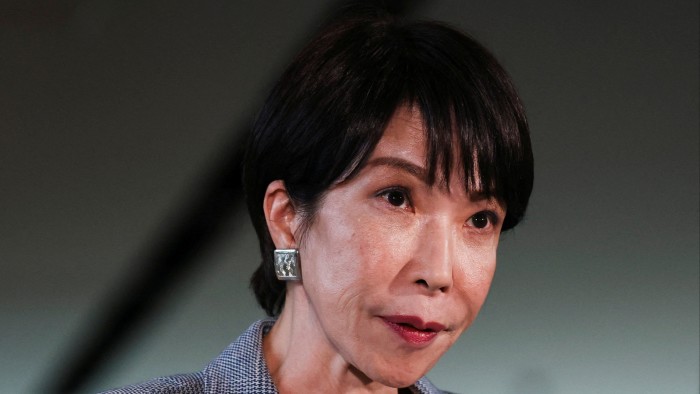
Japan is frustrated by the Trump administration’s silence on the dispute with China
Japan has urged the US to give Prime Minister Sanae Takaichi more public support after expressing frustration at the level of support she has received following comments about Taiwan that angered China.
Tokyo thinks top US officials have not offered enough support to Japan, according to current and former US and Japanese officials, after China lashed out at Takaichi for suggesting a Chinese attack on Taiwan could pose an “existential threat” to justify Japan’s military deployment.
Shigeo Yamada, Japan’s ambassador to Washington, has asked the Trump administration to increase its public support for Tokyo, according to people familiar with the diplomatic negotiations.
China attacked Takaichi, threatened economic retaliation and warned its citizens to avoid Japan. Takaichi said on Sunday that Chinese warplanes had locked their radars on Japanese fighter jets southeast of Okinawa on Saturday, in what she called an “extremely regrettable” incident.
“Japan has strongly protested against the Chinese side, and we have strongly demanded measures to prevent a recurrence,” she told reporters on Sunday, according to Kyodo. “We will answer calmly and decisively.”
Washington has offered some support to Takaichi, and George Glass, the ambassador to Japan, told reporters last month that Trump and his team “have his back.” However, other direct public support was little.
The crisis in Japan-China relations comes as Trump told his team not to take steps that could jeopardize the trade deal he struck with Chinese President Xi Jinping in October.
One Japanese official said Tokyo did not believe the US was wavering in its commitment to Japan, but added there was deep disappointment at the lack of public support from top Washington officials.
Christopher Johnstone, the former top White House official on Japan, said Washington should have welcomed Takaichi’s declaration that Japan would help US forces if they were attacked in defending Taiwan against China.
“This was the clearest statement ever made by a Japanese prime minister about Japan’s commitments to the US during the Taiwan emergency,” said Johnstone, now at consultancy The Asia Group.
“Leaving aside whether it was wise to make that statement publicly, it was a statement that Washington should have accepted. Instead, except for reports from the US embassy in Tokyo, it was met with mostly silence.”
Some people said the lack of support from the US was ironic given that Elbridge Colby, the Under Secretary of Defense for Policy, had been pressing Japan to make clear what role it would play if the US and China went to war over Taiwan.
After earlier requests for support, US officials told Tokyo that a strong statement would come from Washington, but Japan was disappointed when it appeared to be a post on social media X by a foreign ministry deputy spokesman, according to people familiar with the situation.
This week, Chris Landau, the deputy foreign minister, spoke with Takehiro Funakoshi, the head of Japan’s foreign ministry. The State Department said it reaffirmed the U.S. commitment to the alliance, but the transcript of the call did not mention China’s aggressive response to Takaichi’s statement.
Trump has offered no public support for Takaichi despite the warm relationship they struck in Tokyo in October. Asked about Japan’s request for more support, the White House noted that Trump described his relationship with Takaichi as “great.” The Foreign Office referred to X’s contribution from the spokesperson.
“The absence of public statements of support for Prime Minister Sanae Takaichi from both the White House and the State Department is puzzling and must be unnerving for both Tokyo and Taipei,” said Dennis Wilder, former senior Asia adviser in the George W. Bush White House.
In an interview with Fox News last month, Trump was asked about a social media post by China’s consul general in Osaka that suggested Takaichi should be killed because of her comments.
If “a dirty neck sticks up uninvited, we will cut it without hesitation,” he wrote in a now-deleted post.
Trump responded: “Many of our allies are not our friends.” He offered no support to Takaichi even though his mentor Shinzo Abe, a former prime minister who was close to Trump, was assassinated in 2022.
Randy Schriver, chairman of the Indo-Pacific Security Institute and the Pentagon’s top Asia official in Trump’s first term, said it would be “appropriate” for the White House to issue a strong defense of Takaichi.
Speaking at Georgetown University this week, he added that the consul general’s comment should also have been more dismissive. “Threatening her life when her mentor was murdered… is outrageous.